Amandeep Mattu
Chandigarh College of Architecture, Chandigarh, India
Corresponding Author: ar.mattu.cca@gmail.com
Anup Kumar Prasad
CSIR-Central Building Research Institute, Roorkee,
India
Cite this article
Highlights
- Climate Responsive Hybrid Technology for High Altitude Cold Climate
- Nil-to-very less carbon footprint
- Improvised thermal performance
Abstract
The study aims to establish a research directory of passive techniques in the field of building construction. It would provide local practitioners the necessary skills to improve and innovate building construction technology for Leh’s harsh, high-altitude cold climates. The research focuses on understanding the cold highland climate of Ladakh, integrating cultural elements into the built environment, and identifying the latest innovative construction technologies. It will help to determine the existing architectural or structural development issues. The study extends to finding possible solutions to the non-renewable indigenous approach and gathering the new trends in the building environment or modern building techniques. Further, the research proposes adapting modern technology that efficiently works in high-altitude, cold climates. It aims to improve indoor environmental quality in harsh climatic conditions by using local materials and developing hybrid solutions. Passive solar techniques can take advantage of the available energy source.
Keywords
Solar-Passive, High-altitude, Hybrid Construction Technique, Thermal Comfort, Vernacular Architecture
References
- O. Nasir and M. Kamal, “Vernacular Architecture as a Design Paradigm for Sustainability and Identity: The Case of Ladakh, India,” American Journal of Civil Engineering and Architecture, vol. 9, no. 6, Dec. 2021. https://doi.org/10.12691/ajcea-9-6-2
- W. Yousuf, “The challenge of sustainability in developing countries and the adaptation of heritage-inspired architecture in context,” Archnet-IJAR, vol. 5, no. 2, pp. 1938-7806, July 2011.
- R. Dayaratne, “Toward sustainable development: Lessons from vernacular settlements of Sri Lanka,” Front. Arch. Res., vol. 7, no. 3, Apr. 2018. https://doi.org/10.1016/j.foar.2018.04.002
- N. Khan, “Vernacular Architecture and Climatic Control in the extreme conditions of Ladakh ASPIRE-2013,” National Conference
- J. F. McLennan, The Philosophy of Sustainable Design, MO EcoTone, Kansas City, 2006.
- B. Singh, and S. K. Dwivedi, Climate change in cold arid region: Horticulture to Horti-business, New – Delhi publishers, New Delhi, 2011.
- IPCC, The Science of Climate Change, Cambridge University Press, Cambridge, 1995.
- Jina, Prem Singh, The Cultural Heritage of Ladakh, Indus Publishing Company, New Delhi, 2003.
- H. Fathy, Architecture for the Poor, University of Chicago Press, Chicago, 1976.
- S. Paul, Climate Change in Ladakh, In Ladakh Studies, edited by Kim Gutschow, vol. 25: 3-6. Kargil and Leh: IALS. 2010.
- S. K. Desai, A. Bhate and A. Varma, “Decoding the Vernacular Practices of The Cold-Dry Climate of The Phyang Village in Leh-Ladakh,”.
- S. S. Sagwal, “Specifications of Ladakh: Ecology and Environment,” Ashish Publishers, 1997.
- A. Cunningham, Ladakh, Gulshan Books Publications, Srinagar, 1997.
- M. V. Beek, K. B. Bertelsen, and P. Pedersen, 1999, “Ladakh: culture, history, and development between Himalaya and Karokaram” Oxford Publication House.
- Jan·Osmaczyk, Edmund; Osmańczyk, Edmund Jan (2003), Encyclopedia of the United Nations and International Agreements: G to M, Taylor & Francis, 2003, 1191.
- N. Joshi, “Efforts to Resurrect and Adapt Earth Building and Passive Solar Techniques in Ladakh, India,” Oct. 2013. https://doi.org/10.1201/b15685-106
- C. Flavin, “Energy and Architecture: The Solar and Conservation Potential,” Worldwatch Paper 40, Nov. 1980,
- B. Schepp and S. M. Hastie, “The Complete Passive Solar Home Book,” University of Minnesota, Tab Books, 1985.
- K. Rijal and N.K. Bansal, “Passive Solar Building Technology: Potentials for Application in Mountain Areas”.
- H. J. Moore, “Making use of the heat of the Sun,” Unesdoc.unesco.org, https://unesdoc.unesco.org/ark:/48223/pf0000077448
- B. Erat, Manual: Passive Solar Energy in Bhutan. National Urban Development Corporation, NUDC/005/1985. Bhutan: Royal Government of Bhutan, 1985.
- P. Gut, and D. Ackerknecht, “Climate Responsive Building,” 1996. In Regional Workshop on Passive Solar Architecture. Guwahati, Assam: Energy Division, Assam Science Technology and Environment Council/Ministry of Non-Conventional Energy Sources.
 Bishal Thapa





 Fred Sherman
 Sumedha Malaviya
 Satish Kumar


 The three main global energy concerns of providing access to modern energy, enhancing the security of the energy supply, and minimising the impact of energy systems on the climate have an impact on both national and international energy governance. To develop solutions that address the many facets of these difficulties, however, a variety of actors and stakeholders must be included due to the complexity of the energy challenges.
 Cities are responsible for more than 70% of the world’s energy consumption and 40% to 50% of its greenhouse gas emissions. Managing increasing urbanisation is a challenge, and nations must deal with the effects it will have on the environment in terms of energy and climate.
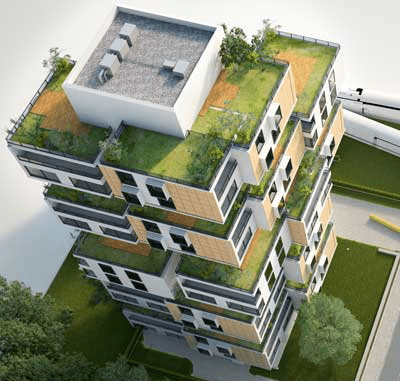 Our transition to a future with lower carbon emissions depends heavily on buildings. They are our places of residence, rest, and employment; they also account for around one-third of the world’s greenhouse gas emissions and nearly 40% of the world’s energy usage.